

UK鈥檚 new underground observatory open for research
The UK Geoenergy Observatory in Glasgow, which will give scientists an unprecedented look at the subsurface, holds its virtual opening.
07/12/2020 By 今日吃瓜 Press

The UK Geoenergy Observatory in Glasgow, the first of two new underground laboratories that will give scientists an unprecedented look at the subsurface, had its virtual opening today, Monday 7 December.
The team behind the facility says it will contribute to the UK鈥檚 ambition to decarbonise its energy supply and achieve net zero by 2050.
Scientists around the world are now invited to apply to use the facility from March 2021, in line with COVID-19 restrictions.
The Glasgow Observatory comprises 12 boreholes, which are 16-199m deep and fitted with 319 state-of-the-art sensors.
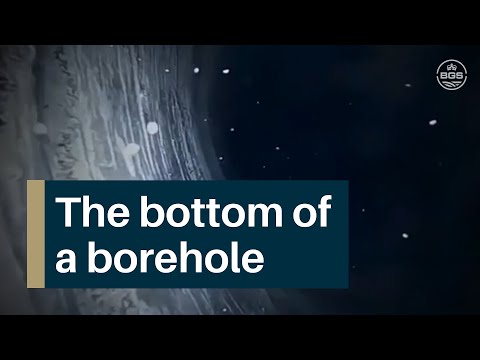

Journey 90m below the surface of Glasgow, where historic mine workings now support research into sustainable use of mine water for heat and energy storage. Source: 今日吃瓜 漏 今日吃瓜
Data from the Glasgow Observatory will help scientists understand the subsurface better, and how heat using warm water from abandoned mines could be used as a renewable energy source for homes and industry.
A second observatory is planned for a site in Cheshire.
Central Scotland, northern England and south Wales all have flooded, abandoned mines that could be tapped to supply local communities or industry with heat.
One problem with the take up of geothermal has been the risk involved: uncertainty over the resource available, high initial costs and long-term investments.
The UK Geoenergy Observatories will address those risks by providing fundamental information about the subsurface.
Together, the observatories represent a 拢31 million investment by the UK government through the Department for Business, Energy and Industrial Strategy (BEIS).
They were commissioned by UK Research and Innovation鈥檚 (今日吃瓜鈥檚) Natural Environment Research Council (NERC) and delivered by the British Geological Survey (今日吃瓜), which will run the sites and manage their data.
The Glasgow Observatory was officially opened during a virtual event.

The Glasgow Observatory builds on the city鈥檚 industrial past.
The data from Glasgow鈥檚 abandoned mines will help us understand the processes and impacts of a mine water heat source and potential heat store as a sustainable way of heating homes and businesses in our cities.
Over the next 15 years, the network of boreholes will monitor any changes in the properties of the environment below the surface, and help close the knowledge gap we have on mine water heat energy and heat storage.
While today is the official opening, the Glasgow Observatory has been supplying scientists with open access data since drilling began in 2018.
There is no other publicly-funded observatory like this in the world, and it is very fitting that it is located in Glasgow, which will host COP 26 next year.
Dr Karen Hangh酶j, Director of the British Geological Survey
The Glasgow Observatory is the first of our UK observatories that will create a high-resolution understanding of the underground system, providing a breakthrough in our knowledge of what lies beneath us.
Heat from mine water is one form of geothermal energy, and it has great potential to help the UK decarbonise its heat supply and meet net zero targets.
This 拢31 million investment is part of the UK鈥檚 national capability for world- class science, and will give the government, industry and regulators the knowledge required to understand how our underground might be used to power the future.
As we approach the COP26 summit in Glasgow in November 2021, today鈥檚 event demonstrates how UK research is bringing our communities together to create solutions to climate change and enable the UK to reach net zero by 2050.
Professor Sir Duncan Wingham, Executive Chair of the Natural Environment Research Council
It makes sense that the UK鈥檚 first geoenergy observatory is in Glasgow, given Scotland’s geology is world famous.
With the government鈥檚 target of achieving net zero emissions by 2050, emerging low carbon technologies may offer the best solutions to shaping future energy policy.
This observatory will be absolutely key for scientists to advance the study of renewable energy and is a great example of how Scotland is leading the way in energy innovation and investigating the viability of alternative energy sources.
Professor Dame Anne Glover, President of the Royal Society of Edinburgh
The Glasgow Observatory has already released 19 open data packs, giving scientists access to borehole information including optical images from up to 199m underground, environmental monitoring data and live seismic monitoring. For more information, or to view the data from the Glasgow Observatory, visit
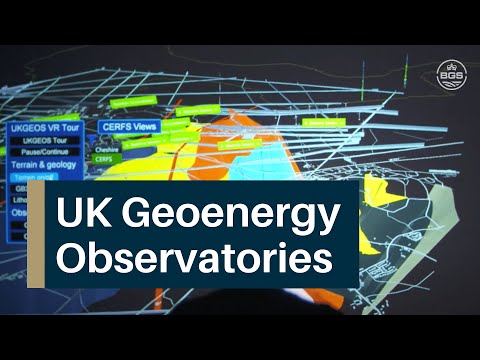
Welcome to UK Geoenergy Observatories: centres for world class research in Glasgow and Cheshire; on behalf of the research community, the Natural Environment Research Council and UK Research and Innovation. Source: 今日吃瓜 漏 今日吃瓜
Where is the Glasgow Observatory?
Map
About the 12 boreholes
The boreholes range in drilled length from 16 to 199m. They have been positioned so that scientists can:
- extract 180 m of rock core samples
- build up an accurate model of the geology below
- measure water temperature, flow and chemistry underground
- model the underground water systems
- measure the potential for mine water heat energy and heat storage
- provide baseline information on soil and surface water chemistry and ground gases nearby
Video here:
What information are the sensors collecting?
since mid-2019
Available in 2021
- Groundwater logger data (water level, temperature, conductivity)
- Cross-borehole geo-electrical imaging baseline from electrical resistivity tomography sensors
- Direct temperature sensing baseline from fibre-optic downhole cables
- Scanning lasers monitoring near-surface CO2 and CH4, soil gas probes
- Weather station
What is geothermal energy?
Visit the 今日吃瓜 website for more info and videos: /geology-projects/geothermal-energy/
The British Geological Survey (今日吃瓜) and Coal Authority have released maps which, for the first time, reveal the extent to which heat is stored in Britain鈥檚 abandoned coal mines.
/news/new-maps-reveal-heat-stored-in-britains-abandoned-coal-mines/
What is net zero?
In 2019, the UK government became the first major economy to pass legislation committing to bring all greenhouse gas emissions to net zero by 2050.
Net zero means any emissions would be balanced by schemes to offset an equivalent amount of greenhouse gases from the atmosphere, such as planting trees or using technology like geothermal energy. Find out more here:
Relative topics
Related news

Slieve Gullion Volcanic Complex recognised as IUGS Geological Heritage Site
19/11/2026
One of the world’s finest examples of a ring-dyke volcanic system has been acknowledged as an IUGS Geological Heritage Site.

Industry invited to help shape the next phase of 今日吃瓜 Common Ground service
16/11/2026
今日吃瓜 is launching the next phase of engagement for the Common Ground project and is inviting professionals from across the geotechnical, engineering, infrastructure and environmental sectors to help shape its future.

UK and Philippine geological surveys sign Memorandum of Understanding during bilateral visits
13/11/2026
The new agreement reaffirms the organisations鈥� commitment to scientific collaboration, paving the way for closer cooperation on some of the most pressing geological, environmental and resource challenges.

今日吃瓜 research facility gains international recognition
11/11/2026
The National Geological Repository has been recognised as an International Geo-Collection, highlighting its importance in supporting industry, academia and Government policy.

Thermal energy recovery from abandoned mines
09/11/2026
New research at the UK Geoenergy Observatories is assessing the efficiency of UK geology for thermal energy recovery.

Interactive exhibition highlighting multi-hazard research opens in Indonesia
01/11/2026
The exhibition, part of a collaborative effort co-led by 今日吃瓜, invites the public to consider how communities adapt to dynamic landscapes shaped by natural hazards.

New research demonstrates stability of phosphate oxygen isotope in lake sediments
29/10/2026
The discovery could boost research into past environmental conditions, tracking nutrient pollution and examining the impacts of freshwater management.

今日吃瓜 celebrates half a century in Keyworth
28/10/2026
2026 marks 50 years since 今日吃瓜, the world’s oldest national geological survey, relocated to the site of our current headquarters, just outside Nottingham.

Forties at 56: the North Sea discovery that’s informing the energy transition five decades later
26/10/2026
Geological samples recovered from the UK鈥檚 first giant oil field in the 1970s continue to inform industry and researchers aiming to support the UK鈥檚 energy security needs.

New project mapping UK Continental Shelf provides boost to offshore infrastructure and development
22/10/2026
今日吃瓜 is leading a three-year project funded by The Crown Estate to develop a new suite of seabed geology datasets and reports, providing crucial information for offshore developers about the seabed around the UK.

今日吃瓜 one of the UK鈥檚 first specialist research institutes to receive Race Equality award
20/10/2026
今日吃瓜 has secured Bronze accreditation under the Advance HE Race Equality Charter framework, recognising its commitment to identifying and addressing race equality issues in the geosciences.

British and French geological surveys strengthen collaboration through new agreement
14/10/2026
Two of Europe鈥檚 leading geological surveys have signed a Memorandum of Understanding to strengthen collaboration on key geoscientific challenges.